Learn · Setup guides
Connect Google Search Console to Outloop
Last updated:
In short
Google Search Console uses OAuth, not an API key.
You create one Google Cloud OAuth client, authorize the Search Console scope, and exchange it for a refresh token. Outloop stores the OAuth credential locally in macOS Keychain, pins it to the exact Search Console property, and lets agents use it only through the API Bridge — minting short-lived access tokens host-side, so the agent never sees the Google token.
What this setup gives you
You will create one Google Cloud OAuth client, generate a Search Console refresh token, pin the exact Search Console property into Outloop, and run a first proof through your agent. Outloop stores the OAuth credential locally and uses it through the API Bridge — the agent never sees the refresh token or access token.
client_secret, refresh_token,
access_token, Authorization header, or Bearer token. Their only destination is
the Outloop Mac app — never Outloop Cloud, the website, chat, docs, or .env files.
What you need before starting
- ✓Access to a Google Cloud project.
- ✓Access to the relevant Google Search Console property.
- ✓Outloop installed and activated, with a workspace selected.
1. Enable the Search Console API
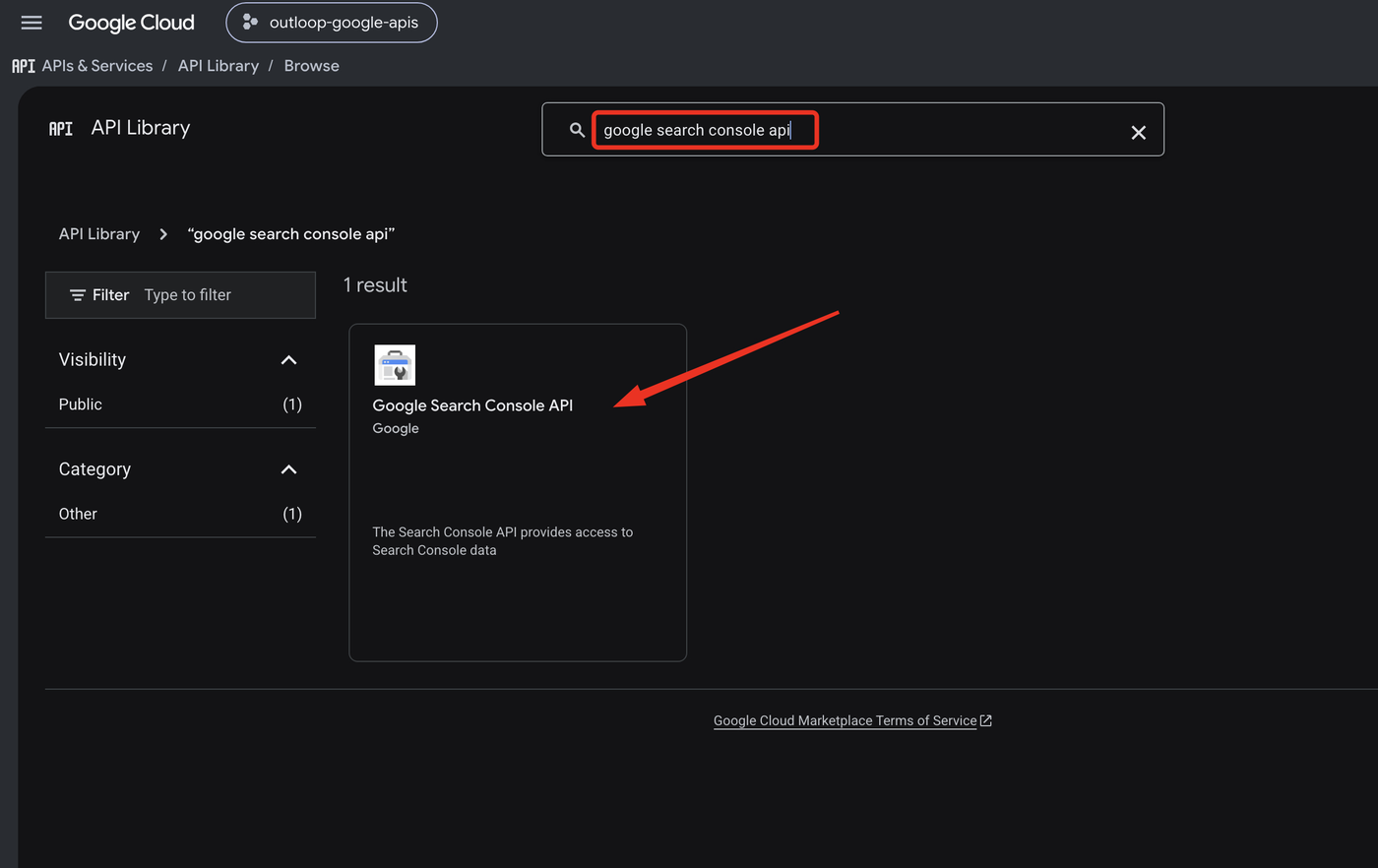
In Google Cloud Console, open your project, then go to APIs & Services → Library and search Google Search Console API.
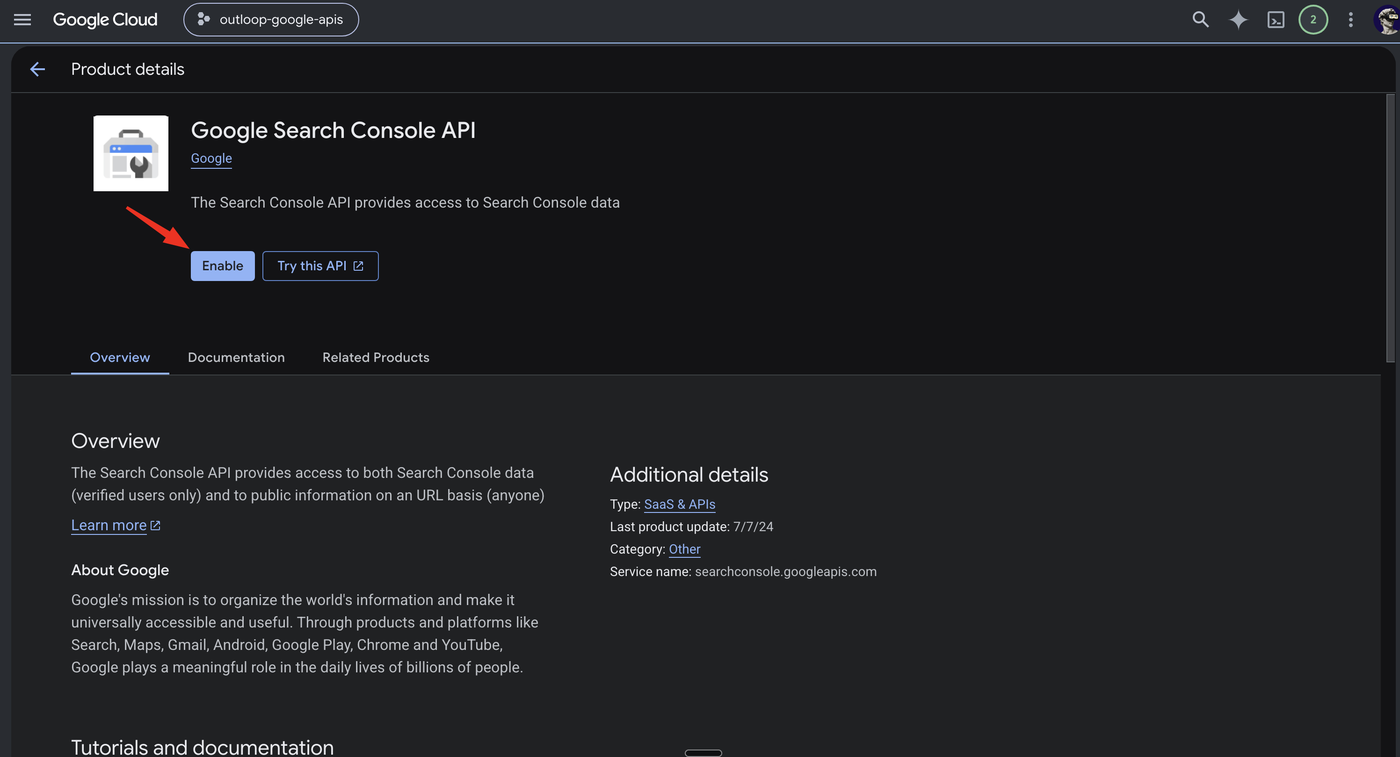
Open the result and click Enable.
2. Create an OAuth client
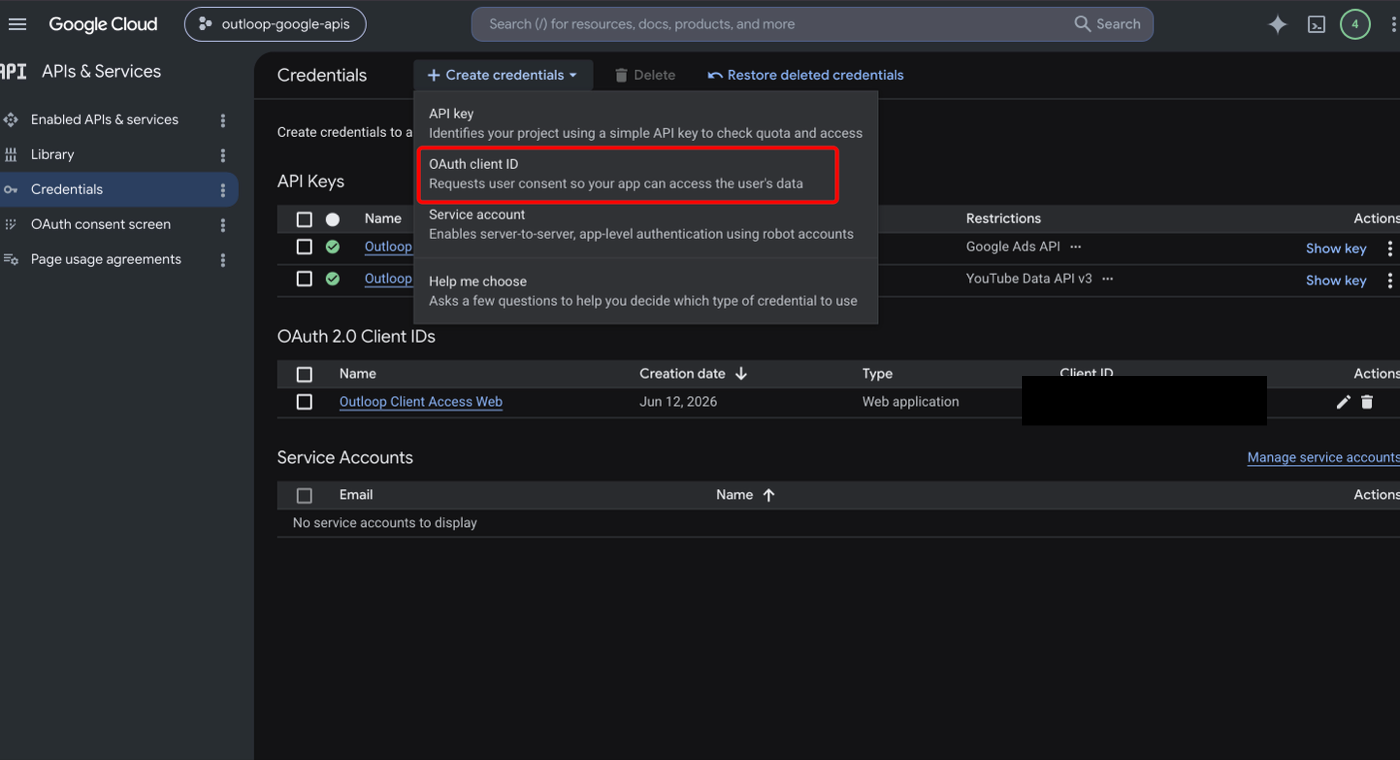
Go to APIs & Services → Credentials, then Create credentials → OAuth client ID.
Choose Application type: Web application, name it Outloop Search Console OAuth, leave Authorized JavaScript origins empty, and under Authorized redirect URIs add the OAuth Playground URL:
https://developers.google.com/oauthplayground
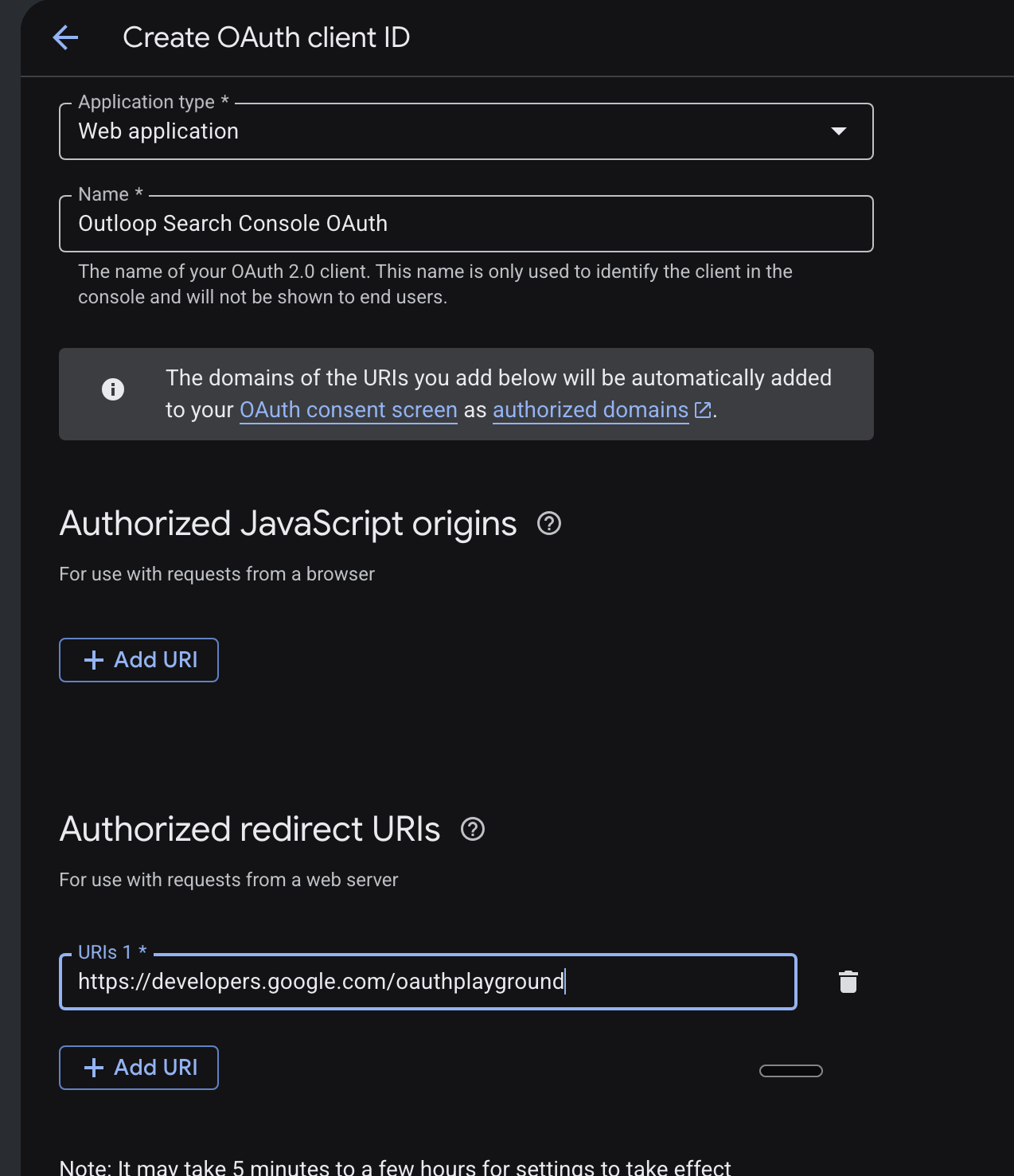
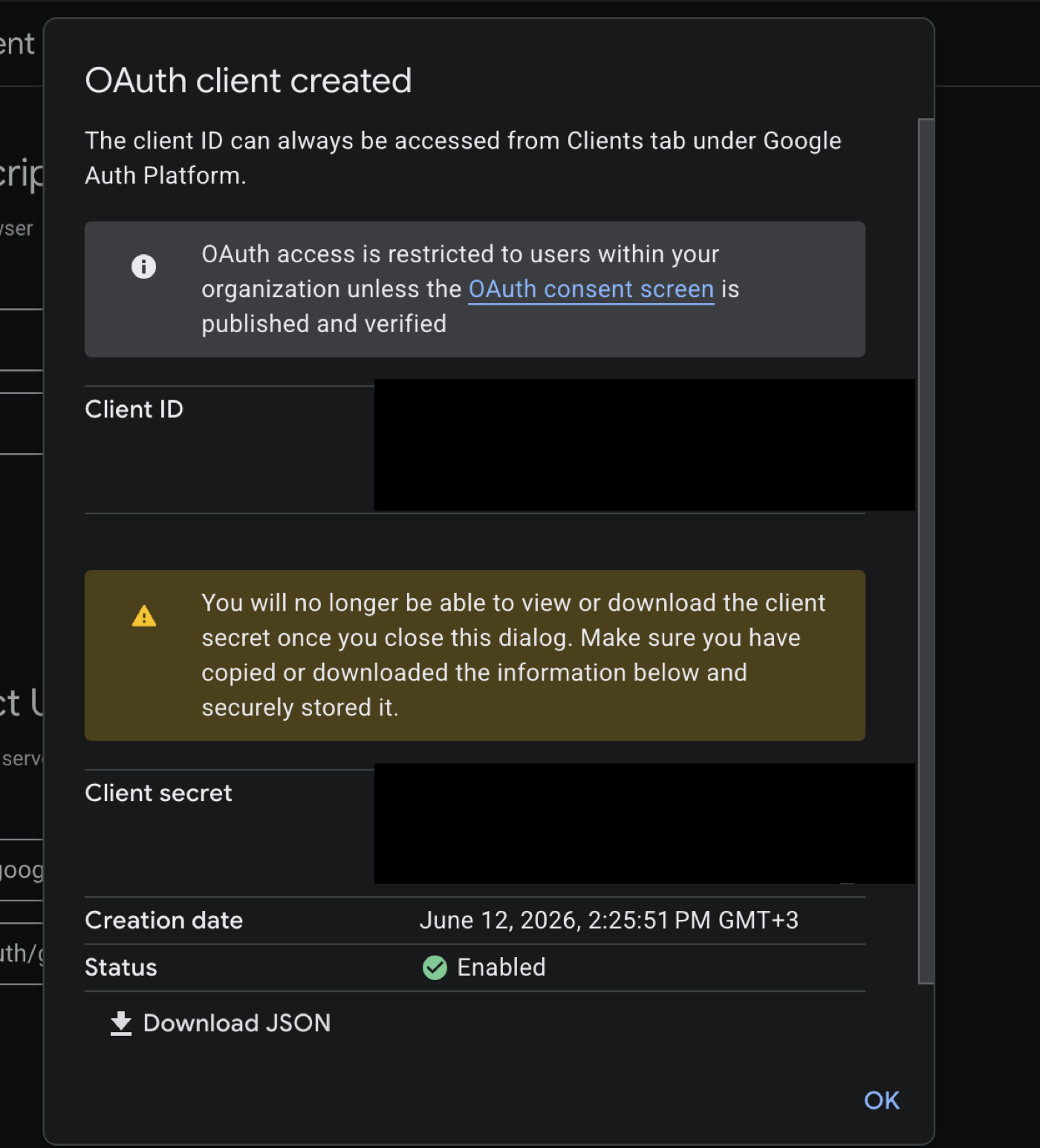
Click Create, then copy the Client ID and Client secret from the dialog.
3. Get a refresh token (OAuth Playground)
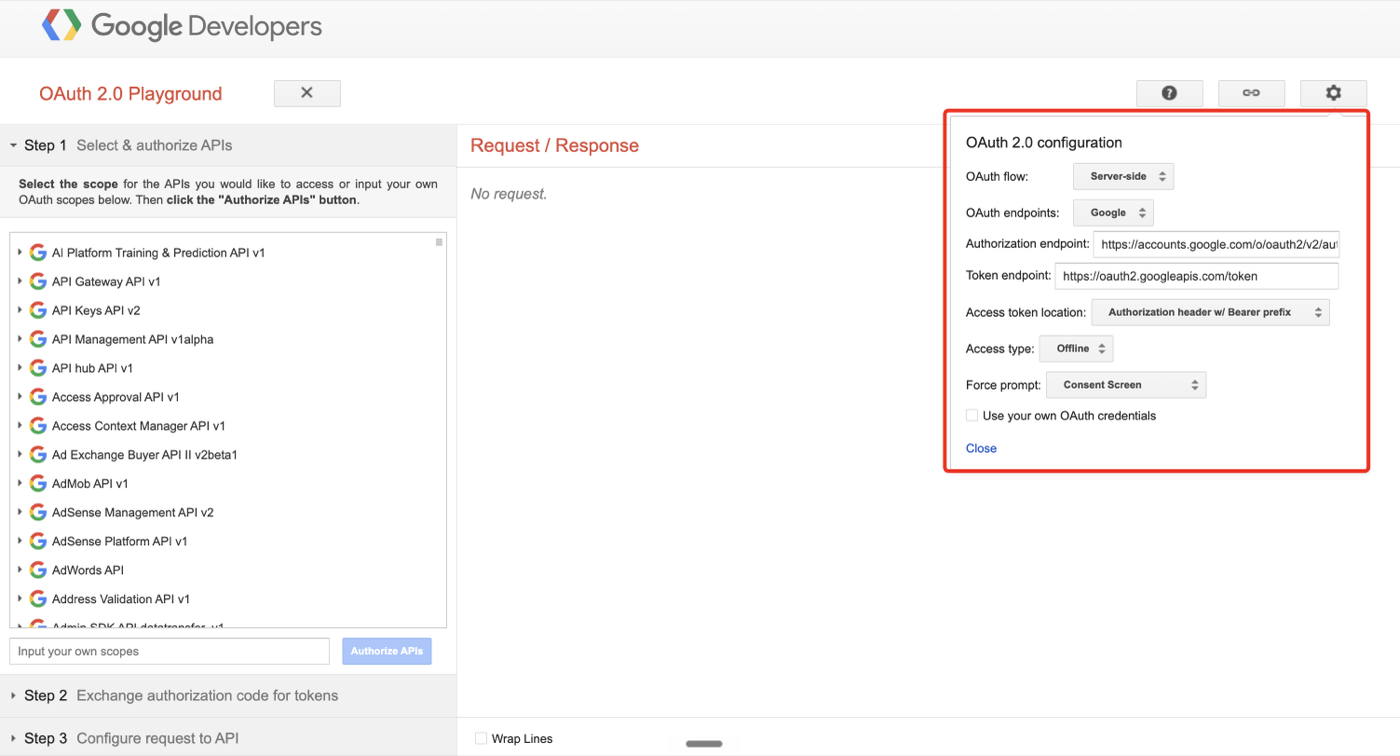
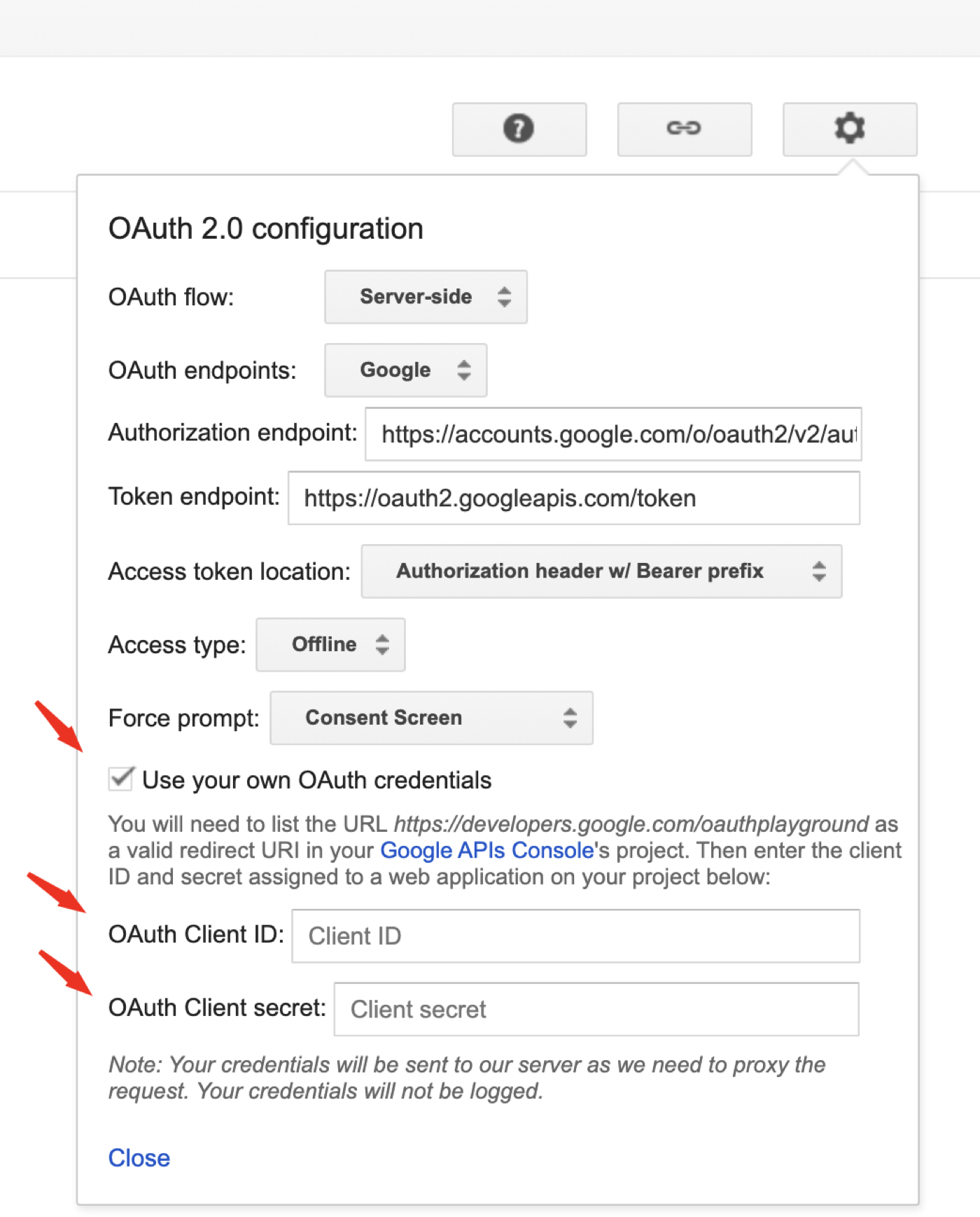
Open developers.google.com/oauthplayground, click the gear icon, and set: OAuth flow Server-side, Access type Offline, Force prompt Consent Screen, and check Use your own OAuth credentials. Paste the Client ID and Client secret (do not screenshot the pasted secret).
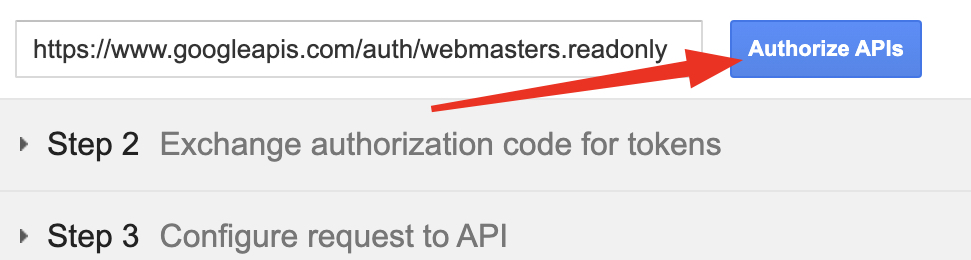
In Step 1, paste the Search Console scope and click Authorize APIs:
https://www.googleapis.com/auth/webmasters.readonly
webmasters.readonly
for read-only Search Console access (recommended for first setup). If you intentionally need broader approved
actions later, authorize the broader webmasters scope.
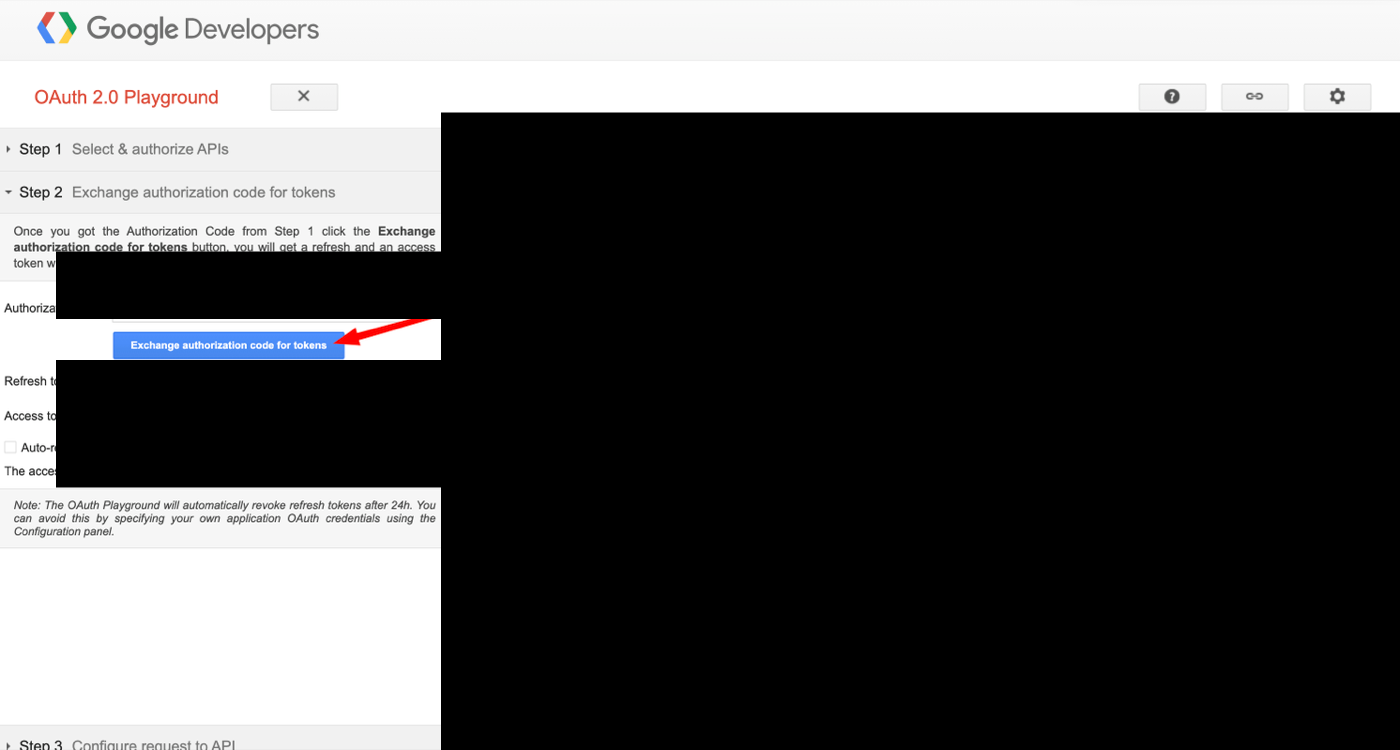
After approving the Google consent screen, OAuth Playground returns to Step 2. Click
Exchange authorization code for tokens and copy the
refresh_token (do not screenshot or publish it).
4. Find your exact Search Console property
This is the step people get wrong. Open Google Search Console, click the property dropdown, and check whether the property is a Domain property or a URL-prefix property. The label is shown right under the property name.
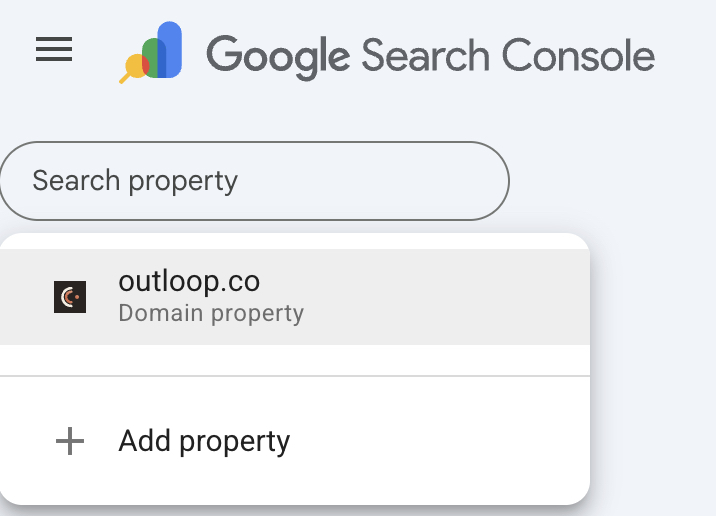
Enter it in Outloop in the matching format:
Domain property      →  sc-domain:yourdomain.com   (e.g. sc-domain:outloop.co)
URL-prefix property  →  https://yourdomain.com/    (exact URL, with trailing slash)
https:// and any trailing slash.
5. Add Google Search Console in Outloop
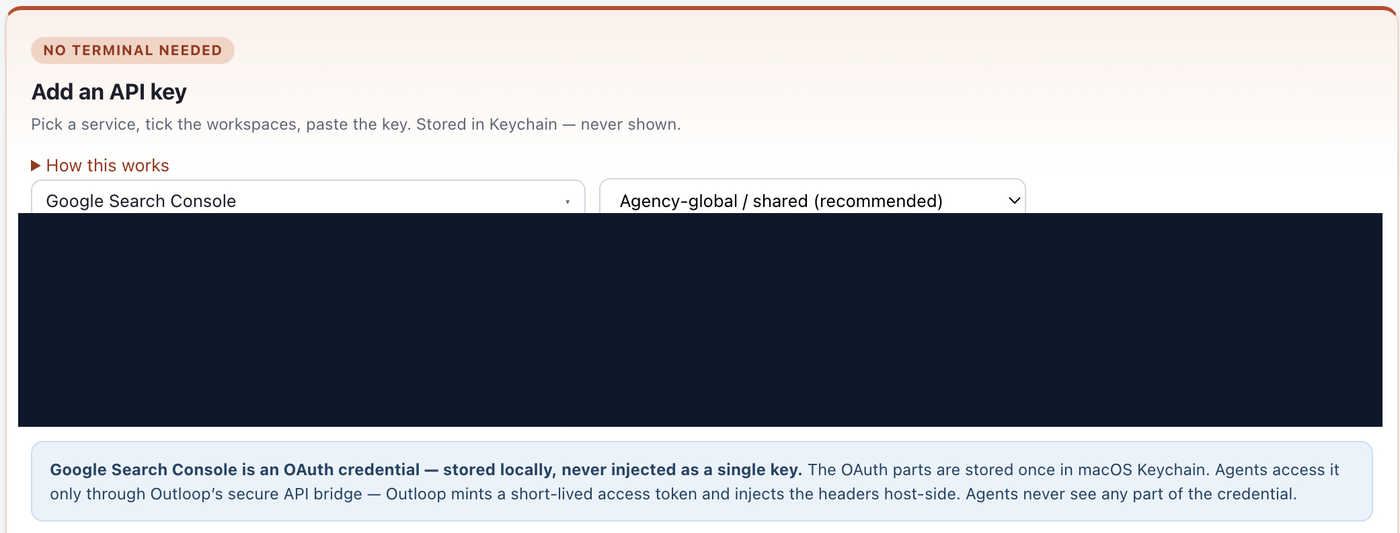
In Outloop, open API Access → Add an API key and choose Google Search Console. Use Agency-global / shared when the same Google user can access multiple properties and you want to grant workspaces over time — tick the workspaces that should use it. Outloop still pins the credential to the specific Search Console property you enter.
6. Fill the OAuth fields and set up
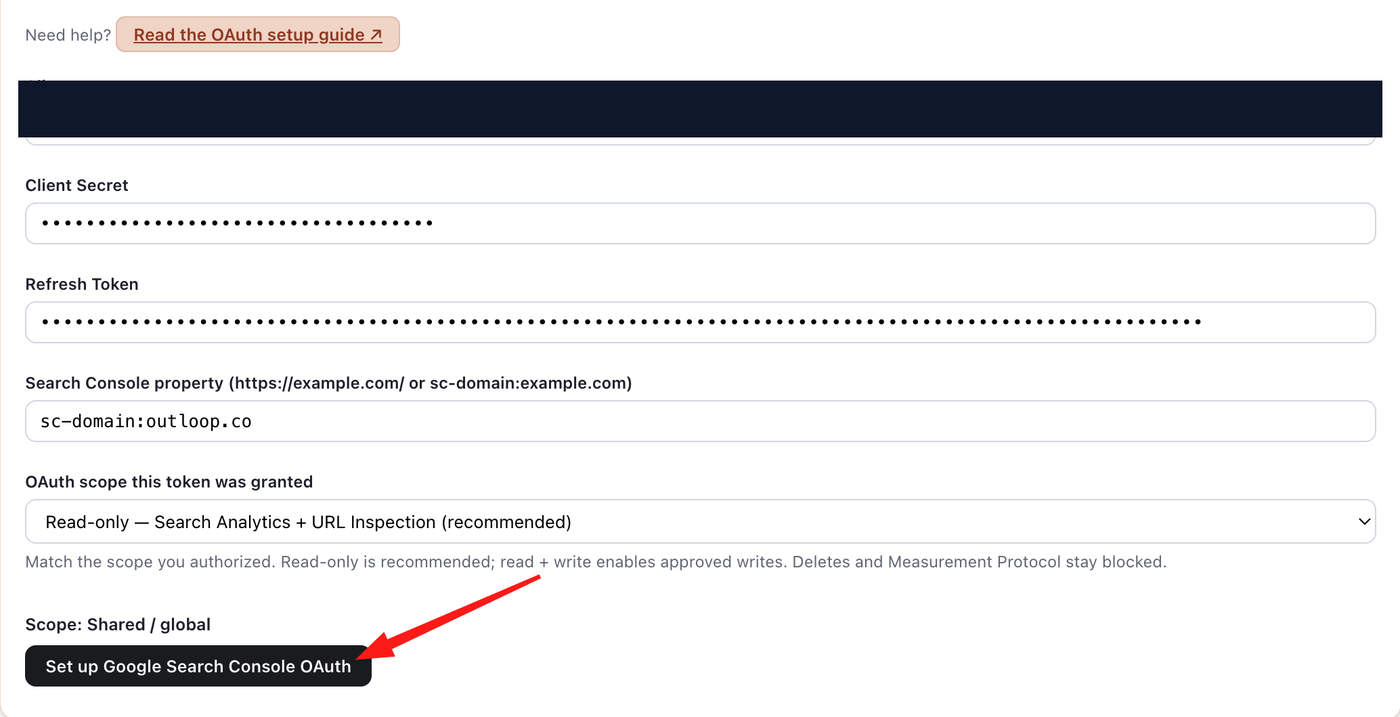
Paste the values you collected, then click Set up Google Search Console OAuth:
- →Client ID and Client Secret from Google Cloud.
- →Refresh Token from the OAuth Playground.
- →Search Console property —
sc-domain:yourdomain.comorhttps://yourdomain.com/. - →OAuth scope — keep Read-only — Search Analytics + URL Inspection (recommended). If you need broader approved actions, authorize the broader scope intentionally; for first setup, read-only is recommended.
7. Enable the bridge and set the safe read path
After setup, click View in stored keys. The row confirms the
credential is stored in macOS Keychain with secret_exposed: false.

On the key row, the bridge is bound to https://www.googleapis.com.
If Outloop asks for a safe read path, set it to a read-only Search
Console endpoint, then click Copy workspace run prompt:
/webmasters/v3/sites
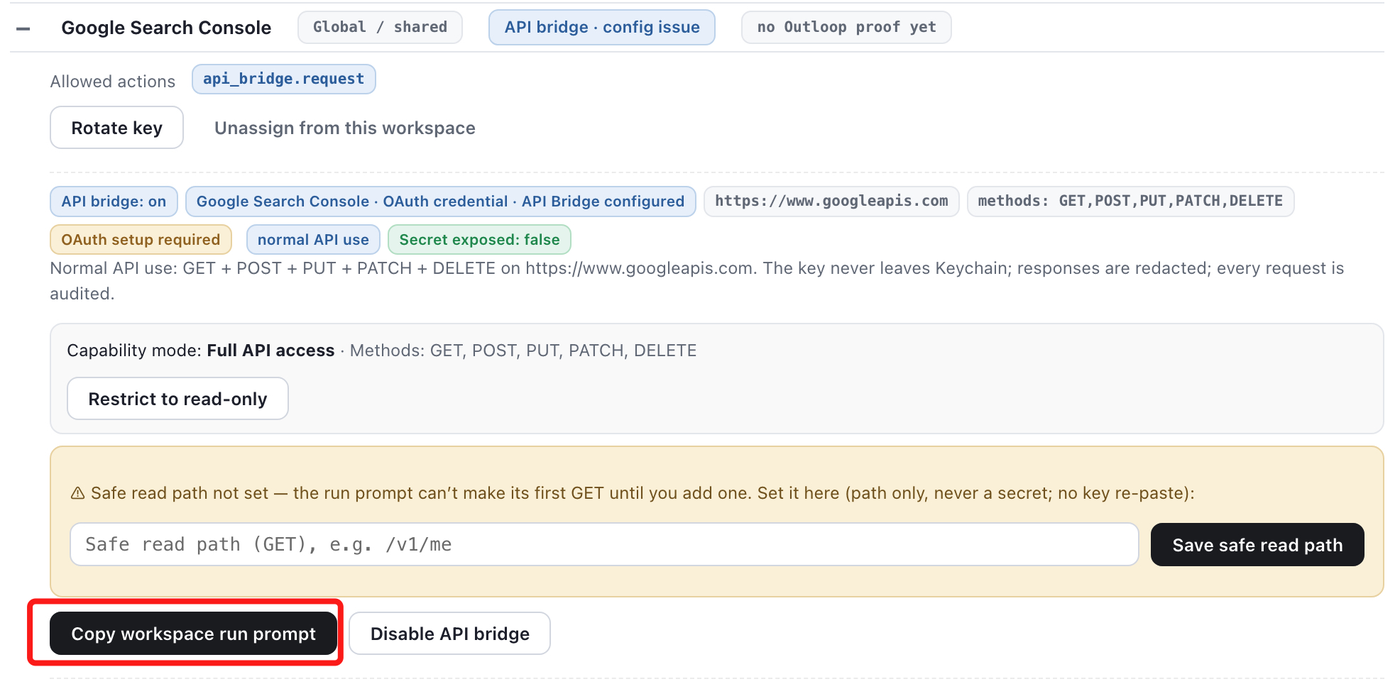
The safe read path gives the agent a first safe GET request. It is a path only — never a secret, and no key re-paste.
8. Run the first proof
Paste the workspace run prompt into your agent. The first proof verifies Search Console access through Outloop:
GET /webmasters/v3/sites
A successful, verified Outloop proof looks like this:
decision / code: allow / OK
HTTP status: 200
service: google_search_console
secret_exposed: false
GSC identity: siteEntry[].siteUrl = sc-domain:yourdomain.com
runtime-verified: yes
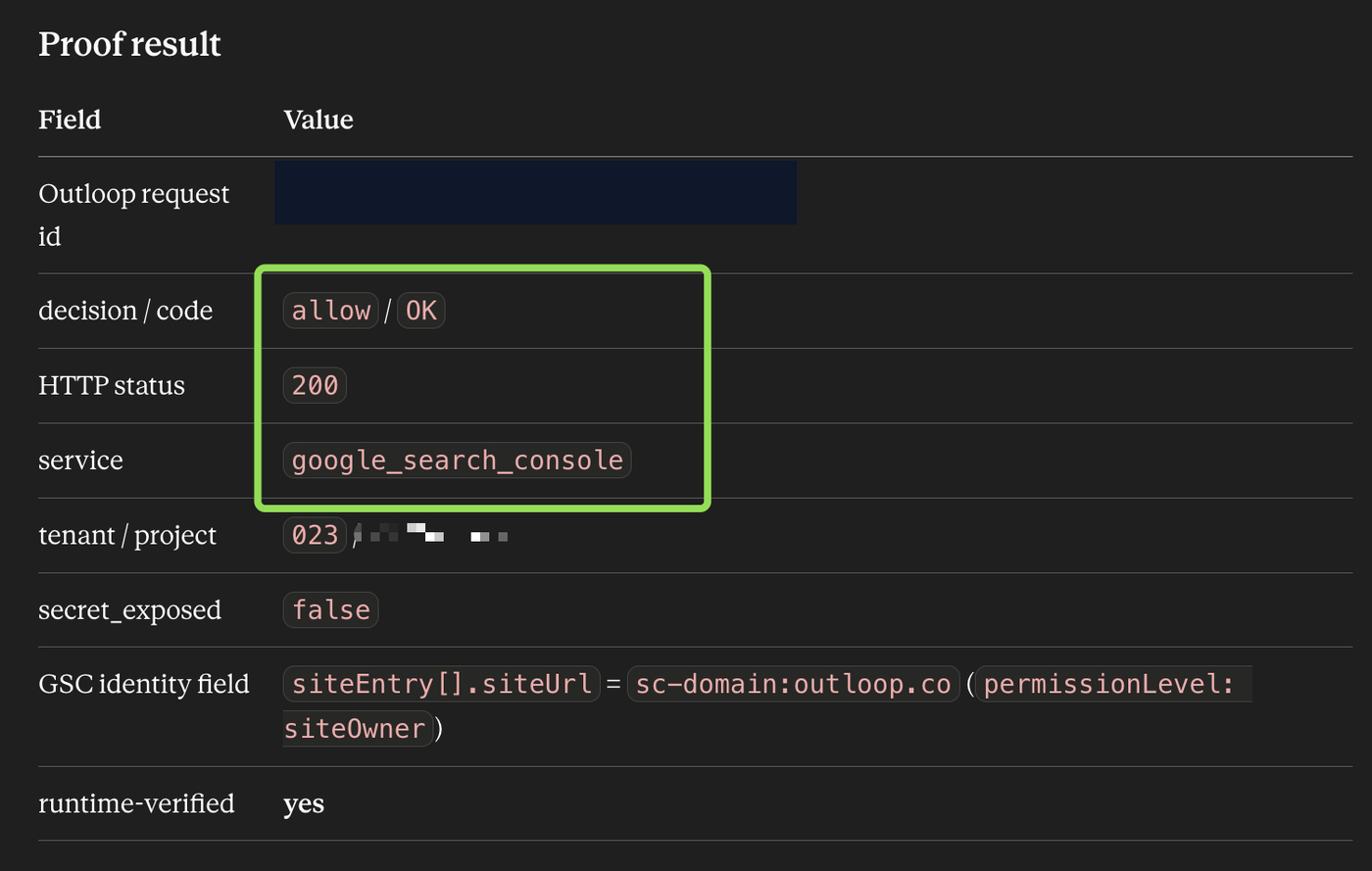
The setup is complete when the proof shows runtime-verified: yes
and secret_exposed: false. Your agent can now use
Google Search Console through Outloop; the Google OAuth credential stays in macOS Keychain, and the agent
never sees the refresh token or access token.
Verified vs not claimed yet
- Verified Search Console read access through Outloop:
GET /webmasters/v3/sitesreturned HTTP 200 with decision allow, an audit entry, the property identity (siteEntry[].siteUrl), andsecret_exposed: false. - Supported, not verified yet Broader write/inspection actions under the wider
webmastersscope: permitted through bridge policy when authorized, but not runtime-verified in this guide.
Troubleshooting
I do not see a refresh token
In the OAuth Playground, confirm Use your own OAuth credentials is checked, Access type is Offline, Force prompt is Consent Screen, and the redirect URI in Google Cloud is exactly https://developers.google.com/oauthplayground. Then authorize again.
Outloop says the property is wrong
Check the Search Console dropdown. If it says Domain property, use sc-domain:yourdomain.com (e.g. sc-domain:outloop.co). If it says URL-prefix property, use the exact URL shown, e.g. https://outloop.co/.
The proof returns 403
Usually the Google user who created the refresh token does not have access to that Search Console property, or the wrong OAuth scope was authorized. Confirm the user's Search Console access and that you authorized webmasters.readonly.
The proof shows a config issue
Check that the Search Console API is enabled, the client ID and secret are correct, the refresh token is pasted, the property is exact, and the safe read path is set to /webmasters/v3/sites if Outloop asks for it.
Adding another Search Console property
Reuse the same Google Cloud project and OAuth client if the same Google user has access. In Outloop, add another Google Search Console entry or assign the shared connector to the right workspace, and always pin the correct property — sc-domain:domain.com for a Domain property, or the exact URL for a URL-prefix property.
Outloop is available with guided onboarding for agency teams. Outloop is an independent tool and is not affiliated with or endorsed by Google. See the security model, the Google Ads API setup guide, or connect any custom API.
Once the read proof succeeds, your agent can use Google Search Console through Outloop — without seeing the OAuth token.
Outloop is available with guided onboarding for AI agencies, operators, and dev shops.